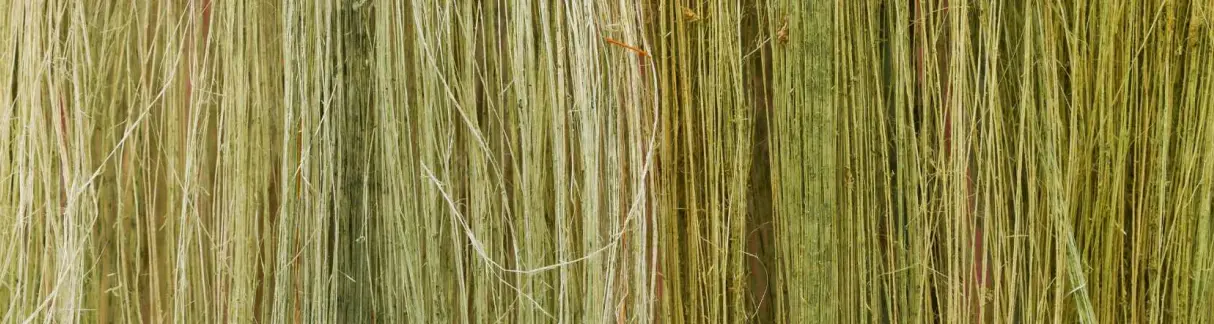
Convinced that industrial performance is inseparable from environmental responsibility, we have developed, alongside our partners, not only a range of natural and recycled fibers meeting the most demanding specifications, but also a field of expertise surrounding the manufacturing, assembly, and use of these materials.
Our approach is based on complete mastery of the value chain, from the field or recycling source to the semi-finished product, guaranteeing traceability, consistency, and technical excellence.
Flax: The ultimate high-performance natural fiber.
- Origin & Provenance: Flax is a local specialty. 80% of the world's production of scutched flax fiber comes from the coastal strip stretching from Normandy to the Netherlands. Eco-Technilin prioritizes short-circuit sourcing at the heart of this exceptional terroir.

- Cultivation & Preparation: A robust plant, flax generally requires no irrigation and very few inputs. At the end of a 100-day cycle, the plant reaches 1m in height. After pulling, the crucial stage of "dew retting" on the ground allows for natural fiber extraction. The pectic cements holding the fiber bundles together are degraded by enzymes generated by bacteria, activated by the natural humidity of these regions. Scutching, the first industrial transformation of this plant, separates its different components: primarily long fiber, shives, and tows.
- Volumes & Outlook: With global demand constantly growing, flax has seen its acreage double in 10 years, peaking at 200,000 hectares in Europe.
- Technical Properties: A champion of specific stiffness, flax offers a high tensile modulus and exceptional vibration damping. These exceptional characteristics are naturally conferred: it is the slenderest plant in the world (1m high for only 2mm in diameter), and its fiber characteristics are designed to withstand weather conditions.
- Composite Advantages: Significant weight reduction without loss of stiffness, increased safety in case of a crash (no sharp splinters), natural sound insulation, and, above all, improved ductility of non-wovens. Flax is primarily used when parts require very deep draws.
- Environmental Impact: As a natural carbon sink, flax sequesters a large amount of CO2 during its growth.
Hemp: A robust alternative for sustainable structures.
- Origin & Provenance: Historically anchored in France (the leading European producer), technical hemp benefits from a structured and dynamic agricultural sector.
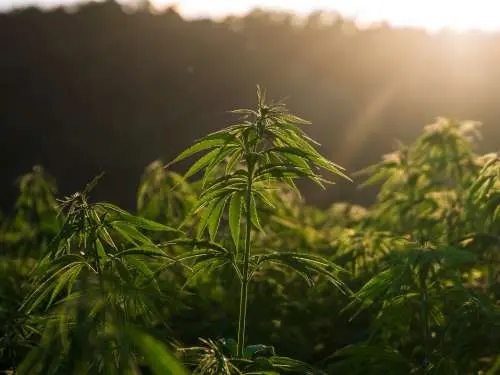
- Cultivation & Preparation: An ultra-fast-growing & resistant crop, hemp naturally smothers weeds and resists climatic hazards well. At the end of the cycle, the plant is 2m high. The technical hemp sector is structured to meet varied specifications (construction, papermaking, automotive, horticultural mulching, animal bedding). Different fibers with different characteristics can thus be obtained depending on the applications. This plant can also be dew-retted on the ground like flax, depending on the intended applications. Straw defibering is exclusively mechanical.
- Volumes & Outlook: The cultivated area in Europe has doubled in recent years, reaching 40,000 hectares. The highly advanced industrial structure of this sector is a major asset for the materials world.
- Technical Properties: A lightweight and resistant fiber, hemp offers very interesting specific stiffness.
- Composite Advantages: Excellent cost/performance ratio. It is ideal for semi-structural parts requiring robustness and weight reduction. Hemp can be used everywhere—it is an "all-terrain" fiber, provided the low shive content is well-managed.
- Environmental Impact: A cleaning plant, hemp structures the soil and requires very little water. Its carbon footprint is extremely favorable.
Kenaf: The solution favored by the automotive industry.
- Origin & Provenance: Cultivated mainly in Asia and Africa, we select kenaf (Hibiscus cannabinus) sources that meet strict ethical standards. Bangladesh is the world's leading exporter of Kenaf.
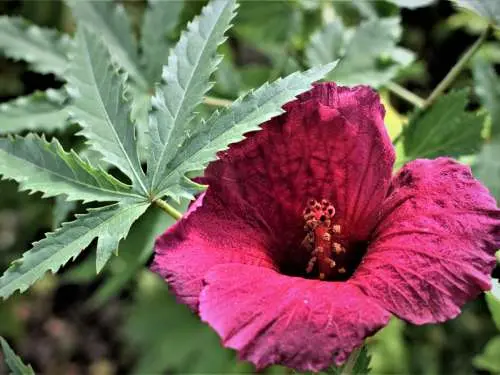
- Cultivation & Preparation: An annual plant of the Malvaceae family, like its cousin Jute, kenaf grows rapidly in hot climates. The plant reaches 5m in height at the end of its cycle. When mature, it is water-retted in running or semi-stagnant water for about fifteen days at 30°C. The quality grade of the fiber depends on the water quality and the retting process. The fiber is then extracted by mechanical decortication.
- Volumes & Outlook: A mature material in the automotive sector, the kenaf market continues to grow for interior trim applications.
- Technical Properties: Its major characteristics are low density, good specific stiffness, and its highly effective water-retting, which gives it exceptional properties regarding odors and volatile organic compounds (VOCs).
- Composite Advantages: Enables record weight savings on door panels and dashboards. Excellent behavior during thermoforming. Kenaf is the most widely used fiber in the automotive industry today because it offers a good compromise across all technical and economic aspects.
- Environmental Impact: An effective CO2 fixative (3 to 4 times more than wood per hectare/year), it is biodegradable and renewable. Low mechanization of harvesting and defibering helps contain its environmental impact.
Recycled Glass Fiber: Valorizing existing materials to strengthen the future.
- Origin & Provenance: Derived from the recycling of post-industrial waste, notably damaged bobbins, production trimmings from composite fabrics, and bobbin ends, this fiber is part of a revaluation logic.
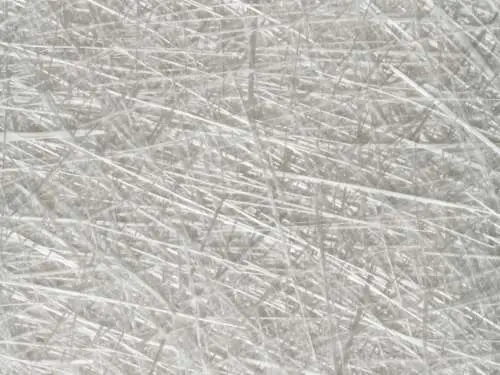
- Preparation: Waste is collected, sorted, cut, shredded, and repackaged to be integrated into our blends.
- Volumes & Outlook: Facing the global challenge of waste management, demand for recycled glass is exploding, driven by European regulations on the circular economy.
- Technical Properties: Shorter than virgin fiber, recycled fiber retains its excellent mechanical properties. It is insensitive to humidity and temperature.
- Composite Advantages: Allows the attributes of glass to be maintained while drastically reducing the carbon footprint of the final material. Recycled glass is primarily used in rear parcel shelves and headliners.
- Environmental Impact: Avoids landfilling and reduces the massive energy consumption associated with virgin glass production.
Regenerated Polyester (rPET): Transforming bottles into technical resilience.
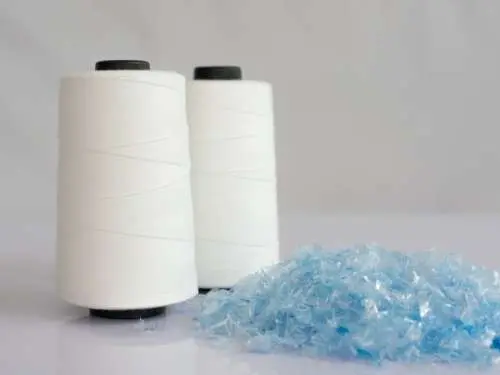
- Origin & Provenance: Primarily comes from the mechanical recycling of plastic bottles.
- Transformation: The PET is washed, crushed into flakes, then extruded to form a new, stable, and homogeneous fiber.
- Volumes & Outlook: rPET has become a global industrial standard. The textile and composite industry absorbs an increasing share of the supply to reduce dependence on virgin oil.
- Technical Properties: Hydrophobic, resilient, and thermoplastic.
- Composite Advantages: Facilitates thermocompression processing on deep draws because the fiber acts as a mechanical binder for the molten material, and its resilience allows for thicker parts after thermocompression . rPET is used to improve material ductility, mainly in door panels, and its resilience guarantees it a choice place in headliners.
- Environmental Impact: Reduces greenhouse gas emissions by more than 50% compared to virgin polyester and contributes to plastic pollution reduction.
Polypropylene (PP) & Recycled PP (rPP): The key to lightweight thermoplastic composites
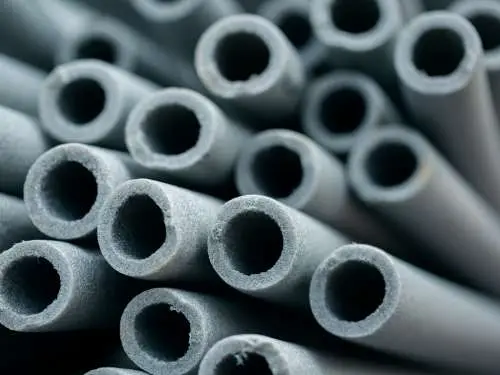
- Origin & Provenance:
- Virgin PP: Sourced from leading European petrochemical companies to guarantee maximum purity.
- rPP: Derived from recycling streams, primarily from the carpet industry.
- Transformation: Virgin PP is extruded from granules into fibers of different diameters and characteristics. Recycled PP involves sorting and defibering BCF bobbin ends.
- Volumes & Outlook: PP remains the most widely used thermoplastic in the automotive sector for its lightness and price. The transition to rPP is massive, encouraged by recycled material quotas in new vehicles.
- Technical Properties: Low density, total hydrophobicity, excellent chemical resistance, and a moderate melting point facilitating transformation.
- Composite Advantages: PP is the main matrix for all interior trim parts; it is easily found at an affordable price and allows for part recyclability.
- Environmental Impact: The use of rPP reduces the carbon footprint tenfold compared to a virgin polymer.