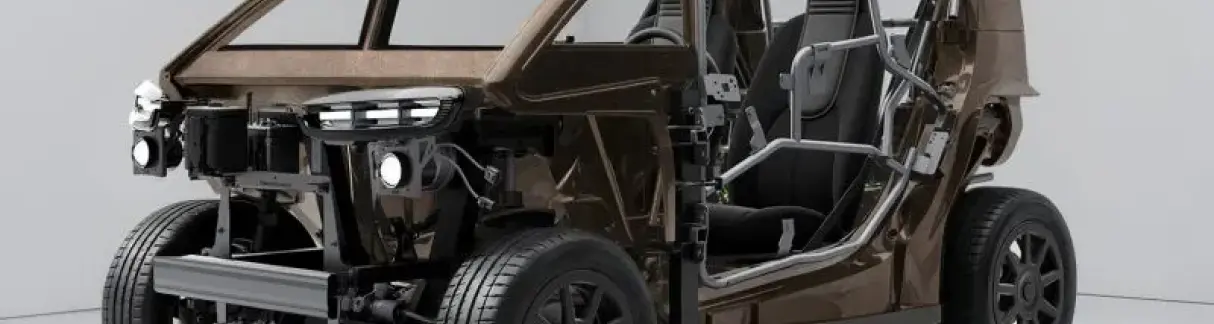
Advanced Composites for Last-Mile Mobility

Advanced Composites for Last-Mile Mobility

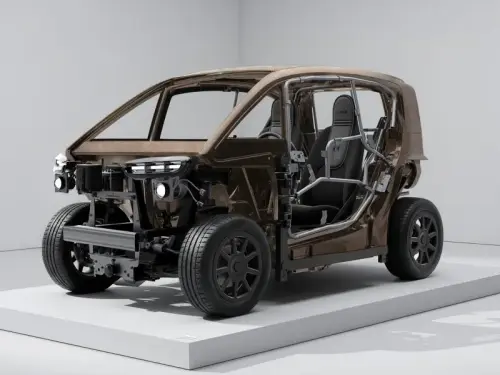
Redesign vehicle efficiency with EcoTechnilin flax fiber reinforcements. In urban mobility and last-mile logistics, weight is the enemy. Our natural fiber composites reduce mass, extend electric autonomy, and lower the carbon footprint of your vehicles—all without compromising structural performance.

Why Choose EcoTechnilin Reinforcements?

  • Reduced weight: Lower mass translates directly into increased range for electric vehicles.
  • High stiffness-to-weight ratio: Ideal for structural and semi-structural components.
  • Cradle-to-gate CO₂ reduction: European-grown, renewable fibers act as a natural carbon sink.
  • Simplified end-of-life: Thermoplastic matrices (PP, PLA) can be recycled or revalorized.
  • Natural vibration absorption: Flax fibers’ hollow structure dampens road vibrations, reducing cabin noise without heavy insulation.
  • Intrinsic thermal insulation: Supports passive thermal regulation in enclosures and cargo compartments.
Eco Technilin

Applications & Industrial Integration

Our semi-finished products (UD, woven, non-woven, mats) integrate easily into existing production lines, from low-volume specialized runs to medium-series industrial manufacturing.

  • Compatible processes: RTM, infusion, thermoforming.
  • Versatile applications:
    Exterior: Cargo bike panels, trailer bodies, urban-impact-resistant fairings.
    Interior: Door panels, dashboards, rear trays, also available with premium visual finishes.
Let's talk about your project

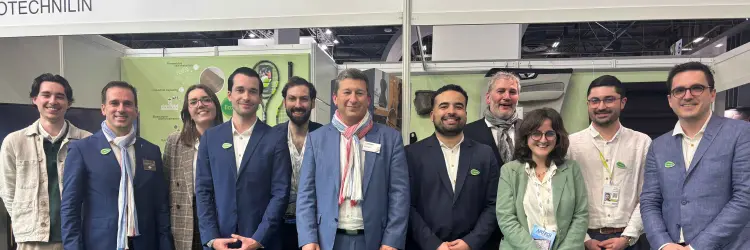
Our technical and commercial teams are available to answer your questions and support you through your composite projects.

Get in touch

Natural & recycled fibres, European performance

Frequently Asked Questions

How do EcoTechnilin's bio-based composite materials contribute to sustainable mobility challenges?

Sustainable mobility requires materials that are simultaneously lightweight, strong and low in carbon footprint. The natural fiber composites (flax, hemp, kenaf) combined with polypropylene developed by EcoTechnilin meet precisely these challenges: they enable the lightweighting of vehicles and mobility devices, reduce energy consumption and lower CO₂ emissions across the entire product life cycle.

What applications in the mobility sector can integrate EcoTechnilin's natural fiber composites?

EcoTechnilin's bio-based materials find applications across many areas of light and soft mobility: electric-assist bicycles (e-bikes), electric scooters, micro-vehicle body panels, interior components for trains and buses, utility vehicle cabins and urban mobility equipment. Their lightweight nature and mechanical strength make them a credible alternative to conventional composites in these fast-growing market segments.

Are bio-based composites compatible with the technical requirements of mobility industry manufacturers?

Yes. EcoTechnilin develops its natural fiber composites to meet the technical specifications of mobility industry manufacturers, whether in terms of mechanical strength, impact resistance, dimensional stability or compatibility with manufacturing processes (thermocompression, injection, pultrusion). The technical team supports each client in the validation of their parts according to the qualification standards and protocols applicable to their sector.